Expressive Arts Therapy

“You can’t use up creativity.                                         The more you use, the more you have.”
Maya Angelou expressive arts therapy


Feeling Overwhelmed by Life's Challenges?

People come to Expressive Arts Therapy for all kinds of reasons. Some are carrying old wounds they’ve never quite been able to put into words. Some are navigating relationship challenges, life transitions, or simply not knowing what they want. Some have tried other approaches and are ready for something different. What they share is a readiness and often, a pull toward something more creative, more holistic, more whole.

If that sounds like you, you’re in the right place.

Expressive Arts Therapy is a form of psychotherapy that uses creative expression, including art, movement, writing, and music, to support healing from trauma, anxiety, and life’s harder moments. No artistic training or talent is needed. Sessions are tailored to you, blending creative tools with evidence-based therapeutic approaches.

Expressive Arts Therapy

What is Expressive Arts Therapy?


Expressive Arts Therapy uses creative expression including visual art, writing, music, movement, and poetry as a pathway to healing. Rather than relying only on talking, it gives voice to the parts of you that words alone can’t quite reach. If some part of you has always been drawn to creating, this might be the therapeutic approach you’ve been looking for.

If creating, expressing, and finding beauty in the world have always felt like part of who you are, even if life pulled you away from those parts of yourself, you may discover that Expressive Arts Therapy feels like coming home.


In our sessions, we will use tools like intuitive drawing, inner parts collage, letter writing, art journaling, free movement, and music to help you access what’s been hard to reach and break free from long-standing patterns. Alongside other therapeutic approaches, these creative tools become a way to express the inexpressible.

How poetry heals trauma. An expressive arts practice for trauma healing.

Who Is Expressive Arts Therapy For?

Expressive Arts Therapy can be especially helpful if you:

• Are healing from childhood trauma or attachment wounds
• Feel anxious, overwhelmed, or emotionally stuck
• Have tried traditional talk therapy and are looking for something different
• Find it difficult to put your feelings into words
• Are highly sensitive, creative, or deeply intuitive
• Are navigating grief, burnout, or a major life transition
• Struggle with perfectionism, people-pleasing, or self-criticism
• Long for a more holistic approach that includes your mind, body, emotions, and creativity

If you recognize yourself in any of these, Expressive Arts Therapy may offer a different path toward healing, one that honors your unique way of processing the world.

You Might Be Feeling...

Sometimes people don’t know what kind of therapy they’re looking for. They simply know something doesn’t feel right. You may be:

• Overthinking everything
• Feeling emotionally numb or disconnected
• Carrying old wounds that continue to affect your relationships
• Constantly caring for everyone else while neglecting yourself
• Feeling burned out, exhausted, or overwhelmed
• Living with anxiety that never seems to fully quiet down
• Feeling disconnected from your body or intuition
• Longing to reconnect with your creativity and a deeper sense of yourself

Expressive Arts Therapy creates space to explore these experiences gently, with curiosity and compassion.

Expressive arts therapy session
Expressive arts therapy materials
Expressive arts therapy magazines and materials

What Is the Difference Between Expressive Arts Therapy and Art Therapy?

People often ask whether Expressive Arts Therapy and Art Therapy are the same. While they share many similarities, there are some important differences.

Art Therapy primarily uses visual art, such as drawing, painting, collage, or sculpture, as part of the therapeutic process.

Expressive Arts Therapy includes visual art but also invites other creative forms of expression, including writing, poetry, movement, music, drama, storytelling, nature, and mindfulness. Rather than focusing on a single creative medium, we allow the creative process itself to guide the work.

Because every person is different, I may integrate several expressive approaches during a session, depending on what feels most supportive for you.

Expressive Arts Therapy

“I’m Not an Artist”

I often hear clients say “I’m not an artist.” Most of us were told that at some point. Expressive Arts Therapy doesn’t require talent or training. It recognizes your inborn ability to create and trusts that the process itself is where the healing happens. Part of the gift of working this way is getting to claim a part of yourself you may have set aside a long time ago.

What a Session Looks Like

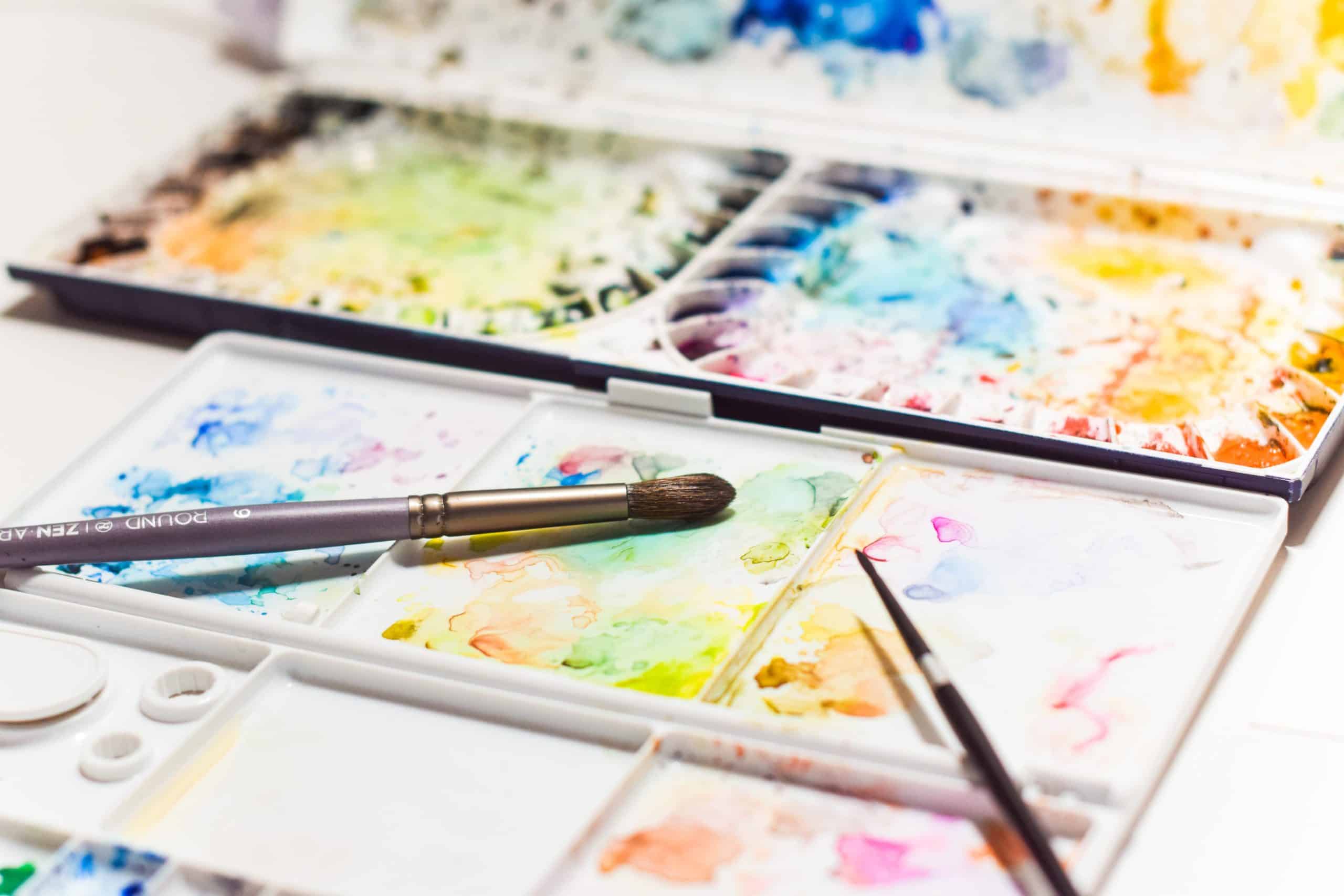
If you’re joining me in person, you won’t need to worry about materials. I provide everything you’ll need. For online sessions, starting with basic supplies like paper, colored pencils, markers, or crayons is a great way to begin. If you feel inspired, you can also explore watercolors, clay, or digital tools as we go.

Each session is shaped around you. We might begin with intuitive drawing, inner-parts collage, letter writing, art journaling, free movement, or music, always without pressure to make something “good.” The focus stays on the process, not the product.

I’ll be right there with you, helping you slow down, notice what’s coming up, and express what’s been hard to put into words.

What Makes My Approach Different

No two people heal in exactly the same way.
Rather than relying on one therapeutic approach, I tailor therapy to your unique needs, strengths, and goals. Depending on what feels most supportive, our work may integrate Expressive Arts Therapy, Art Therapy, EMDR, Brainspotting, Parts Work, Somatic Therapy, Nature-Based Therapy, SoulCollage®, mindfulness, and nervous system regulation practices.

One thing I’ve noticed over my fifteen years as a therapist is that healing often begins when people feel safe enough to become curious about themselves rather than critical of themselves. Creativity offers a gentle way to reconnect with parts of yourself that may have been hidden beneath years of trauma, stress, or self-protection.

Process Not Product


In our sessions, the focus is on the process, not the product. There’s no right way to do this and nothing to perfect. As you create, I’ll be right there with you, helping you slow down, pay attention to what’s coming up, and express yourself freely. What often happens is that the art starts to show you things about yourself that you didn’t know were there. Insights, feelings, longings. And that’s where the real movement
happens.

How Expressive Arts Therapy Can Heal Trauma


Trauma lives in the body, not just the mind. When something overwhelming happens, the brain stores it as a threat in the limbic system, the emotional, felt-sense part of us. This is why trauma can be so hard to talk through. The words don’t always reach it.

Expressive Arts Therapy works differently. By engaging the senses through art, movement, and creativity, we can access what language alone can’t touch and support nervous system regulation. The creative process helps you reconnect with your body, work with what’s stored beneath the surface, and begin to heal at a deeper level. For many people, this is the first time healing has actually felt possible.


How to Become an Expressive Arts Therapist

How to Become an Expressive Arts Therapist

Wondering how to become an expressive arts therapist? I get this question all the time. So I thought I’d answer all your questions here. In this blog, I’ll go over the training requirements, how the work differs from art therapy, and where you can pursue this career....

read more
Expressive Arts Therapy

Creativity isn’t a talent. It’s your birthright. I’m here to support you in claiming it.

Finding Your Way Back to Creativity

Creativity isn’t a technique I teach you. It’s something deeply human that trauma, stress, and self-doubt often disconnect us from, not something we ever actually lose.

We don’t lose our creativity. We lose access to it, through trauma, through years of being told we’re “not artistic,” through the demands of everyday life. Part of this work is simply clearing the way back to something that was always yours.

Expressive Arts Therapy and Self Befriending


Trauma and old wounds have a way of sticking around. One of the ways they show up is in how we talk to ourselves, the inner critic, the self-doubt, the deep distrust of your own instincts and feelings. Over time, you can become your own harshest judge without even realizing it. But underneath all of that is a core part of you that was there before the hurt. I call it the spark, the light of who you really are.

Through tools like giving the inner critic a shape, a color, an image, giving voice to the light inside you before it was muted, and using art for grounding and nervous system regulation, we begin to make contact with that core part of yourself. Something starts to shift in how you relate to yourself. You get curious instead of critical. You begin to trust what comes through you. Little by little it becomes possible to become your own best friend, maybe for the first time.

I Believe Healing is Possible for You


As a creative at heart, I genuinely believe that beauty and creativity are fundamental to being human. We are all creative. We were born to create. This belief is at the core of how I work.

Many clients have shared feeling more grounded, joyful, and connected to themselves through this work. Here’s what some of them have said:

Expressive arts therapy and trauma healing

Why I Love This Work

I’ve always believed that creativity is part of what makes us human. We don’t lose our creativity, we often lose access to it through trauma, stress, self-doubt, or the stressors we face in life.

One of the greatest privileges of my work is witnessing people reconnect with parts of themselves they thought were gone. Sometimes that happens through a drawing. Sometimes through poetry, movement, music, or finally allowing themselves to create without judgment for the first time in years.

Again and again, I’ve seen creativity become a doorway back to self-compassion, resilience, and hope. That’s why Expressive Arts Therapy remains at the heart of how I work.

Is This the Right Fit for You?

Expressive Arts Therapy may be a wonderful fit if you are looking for more than insight alone. It can be especially meaningful if you’re open to creativity, want a mind-body approach to healing, or feel that talking hasn’t fully helped you access what’s happening beneath the surface.

At the same time, therapy is never one-size-fits-all. During our first few sessions, we’ll explore what feels most supportive for you and decide together which approaches best fit your needs. My goal isn’t to fit you into a particular therapy model. It’s to find the approach that helps you heal.

Words from Happy Clients

Expressive Arts Therapy helped me unlock emotions I didn’t even know I had. It was a transformative experience.” K.C.

When I first met with Luna, I struggled to discover my creative and artistic side. I thought I had lost the ability to do art: drawing, painting, or writing. She provided me with creativity prompts and a non-judgemental, safe space, where I was able to embrace my creativity, and allow myself to be present the moment, enjoying the journey of self-discovery. No pressure for deadlines or trying to please anyone but my own inner voice. It feels really good to find that!” – B.P

Q & A

What materials do I need for Expressive Arts Therapy?

If you’re joining me in person, no need to worry about materials—I provide everything you’ll need. For online sessions, starting with basic supplies like paper, colored pencils, markers, or crayons is a great way to begin. If you feel inspired, you can also explore additional materials like watercolors, clay, or digital tools as we progress.

Do I need to have artistic skills?
Absolutely not! You don’t need any artistic skills to benefit from Expressive Arts Therapy. The focus is entirely on the process of creation and self-expression, not on the final product. Everyone has a creative spark, and we’ll nurture that together.
Is Expressive Arts Therapy evidence-based?
Yes. Expressive Arts Therapy draws on research in trauma, the nervous system, and creativity’s role in emotional processing, and is often integrated alongside evidence-based approaches like EMDR and Brainspotting.
Can Expressive Arts Therapy help with specific issues like anxiety or trauma?

Yes, it can! Expressive Arts Therapy is incredibly effective for a range of issues, including anxiety, depression, trauma, and more. By engaging in creative processes, you’ll be able to access and express emotions in a powerful way that traditional talk therapy might not reach.

Can this therapy be combined with other approaches?
Absolutely. Therapy is individualized. Depending on your goals, we may integrate Art Therapy, Expressive Arts Therapy, EMDR, Brainspotting, Somatic Therapy, Parts Work, or mindfulness into our work together.
How often should I attend sessions?
The frequency of sessions really depends on your individual needs and goals. During our initial consultation, we’ll discuss what works best for you and create a tailored schedule. Whether you prefer weekly sessions or a different rhythm, we’ll find a plan that supports your healing journey.
Is telehealth available?
Yes, Expressive Arts Therapy sessions are available both in person and by telehealth throughout California.
How do I get started?

Getting started is easy. Simply book a free consultation to discuss your needs and how Expressive Arts Therapy can support your healing journey.

To learn more about expressive arts therapy and specific expressive arts tools, check out this article or the other articles in my blog.  Or book a free consult now.

And if you would like to pursue Expressive Arts Therapy as a profession, you can check out my blog on the topic here.

Expressive Art Therapy ritual to hold grief and anger

Explore Related Therapy Approaches